Home
Non-Surgical Treatments
Dermal Health & Hydration Assessment
Non-Surgical Treatments – Skin Bio-Remodelling

Dermal Health & Hydration Assessment

Dr Sim Lew-Gor | Facial Plastic Surgery & Aesthetic Medicine
People rarely describe skin changes in technical terms. They describe looking tired, less fresh or less firm than they used to.

Those changes usually come from several things at once: the skin's natural hyaluronic acid declines, collagen becomes less organised, and elastin loses some of its spring. Bio-remodelling treatments aim to improve elasticity, hydration and tissue quality over time, without adding obvious volume.
Begin with Consultation
Dr Sim Lew-Gor assesses what your skin and the tissue beneath it are doing before treatment is considered, and whether skin-level or deeper support is more relevant.
  • Thinning or dehydrated skin
  • Reduced elasticity & early laxity
  • Fine lines & crepey texture
  • Sun-damaged skin
  • Face, neck, décolletage & hands
Why Tissue Behaviour Guides the Choice

Dr. Sim Lew-Gor on Skin Bio-Remodelling

"These treatments are less about creating volume and more about supporting how the skin functions over time."
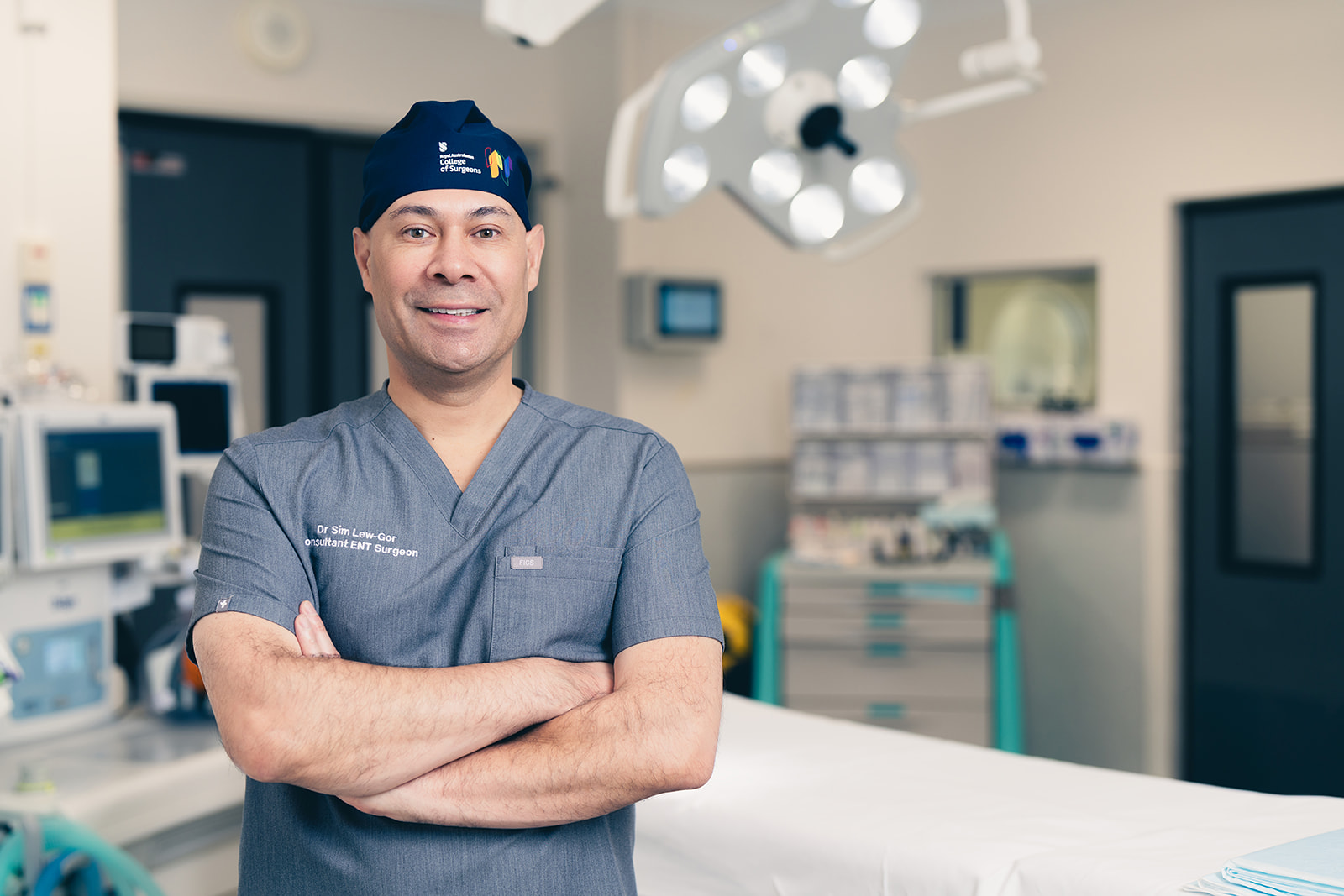
Dr Sim Lew-Gor smiling in grey scrubs and a surgical cap, arms crossed beside an operating table
Skin Bio-Remodelling in Melbourne & Wagga Wagga

How Bio-Remodelling Works

Rather than occupying space to create shape, bio-remodelling treatments aim to work on the extracellular matrix, the environment around the cells responsible for skin quality and repair. They may support hydration and the activity of fibroblasts, the cells that produce collagen and elastin.

Most people do not notice a change in facial shape. More commonly, the skin gradually becomes more elastic, better hydrated and healthier over several weeks.
A Shift in Thinking

From Adding Volume to Supporting Skin Function

The guiding principle
Improve how the skin behaves, not only how it looks.

Shape-Focused Thinking

Skin concerns were often addressed by adding volume.
Volume used for skin concerns
Immediate change expected
Shape altered
Skin quality secondary
One approach for every skin

Function-Focused Thinking

Skin quality is treated at the level where it has changed.
Hydration and elasticity targeted
Gradual change over weeks
Face shape unchanged
Skin-level or deeper support chosen by assessment
Plan matched to tissue behaviour
Chosen According to Assessment

Approaches to Skin Bio-Remodelling

The approach depends on the depth and type of change in your skin.
01
Skin-Level Bio-Remodelling
Aimed at hydration, elasticity and overall skin quality within the dermis.
02
Deeper Support
Aimed at early loss of firmness, supporting tissue integrity without adding obvious fullness.
03
Treatment Areas
Commonly the face, neck, décolletage and hands, where changes in skin quality are often most visible.
04
Course and Maintenance
Many people begin with two sessions about four weeks apart, with maintenance often every six to nine months.
05
When Other Approaches Are Needed
These treatments do not lift the face. Where there is significant laxity or tissue descent, other options, including surgery, are discussed. For hydration and texture alone, see Skin Hydration & Texture Assessment.
25+
Years of surgical experience, face & neck
4
International surgical fellowships
2
Locations in Melbourne & Wagga Wagga
FRACS SURGEON
FELLOW OF THE ROYAL AUSTRALASIAN COLLEGE OF SURGEONS
Skin Bio-Remodelling in Melbourne & Wagga Wagga

Recovery and Timeline

Response varies between patients. The timeframes below are a general guide only.
Days 1–3
Small bumps
Sessions take 15 to 30 minutes. Temporary swelling, small raised bumps at treatment points, tenderness or bruising usually settle within a few days.
Weeks 2–8
Gradual change
Hydration and elasticity improve gradually as the skin responds.
6–9 months
Maintenance
Maintenance supports skin quality as ageing continues, rather than correcting a sudden change.
Results, Risks & Expectations

What Skin Bio-Remodelling Aims to Achieve

The aim is skin that looks healthier, more elastic and better supported, without looking altered. Some people notice mild firming, but these treatments do not lift the face the way surgery does. Results vary between individuals and cannot be guaranteed.

All treatment carries risk. Risks include swelling and small bumps at treatment points, bruising, tenderness, uneven distribution and infection. Rarely, blocked blood flow can cause skin damage.
Risk can be reduced through careful assessment and technique, but it cannot be eliminated. Your individual risks are discussed in full at consultation.
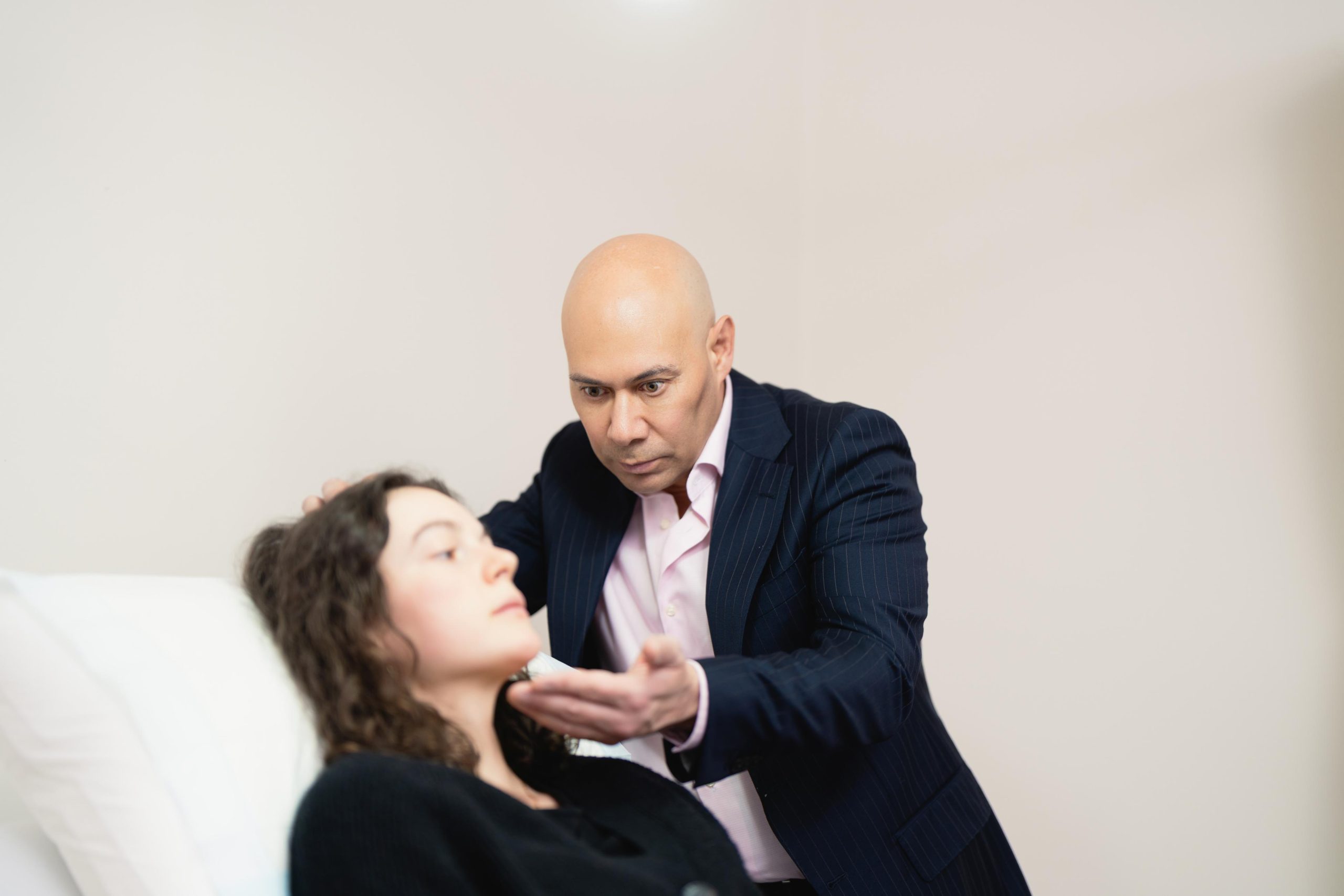
Dr Sim Lew-Gor beside a reclining person, one hand on their head and the other beneath their chin
Consultation & Treatment Planning

Assessing Tissue Quality at Consultation

Consultation focuses on understanding what your skin and underlying tissues are doing before any treatment is considered.

For some people, improving hydration and skin quality is enough. Others may benefit from deeper support, and for some, treatment is not appropriate at all.
What Consultation Involves
Skin Quality
Thickness, hydration and sun damage
Elasticity
Collagen quality and early laxity
Texture
Fine lines and crepey skin
Support
Fat compartments and early loss of firmness
Expectations
An honest account of what is achievable, the timeline and risks

Frequently Asked Questions

Questions most commonly raised about skin bio-remodelling.
What is the difference between skin boosters and bio-remodelling?
Skin boosters mainly focus on hydration and surface quality. Bio-remodelling is aimed more broadly at elasticity, firmness and tissue support, sometimes at deeper levels.
Do these treatments stimulate collagen?
They aim to support the cells involved in collagen and elastin production. The effect is gradual and varies between individuals.
Will my face shape change?
No. These treatments are not designed to add volume or change contour.
Can bio-remodelling lift the face?
Not in the way surgery can. Some people notice mild firming, but expectations should stay realistic where tissue descent is more advanced.
How long do results last?
Results commonly last six to nine months, though this varies with skin condition and individual response.
At what age should treatment begin?
There is no set age. The decision depends on how your skin is behaving.
Areas of Concern

You May Also Be Experiencing

Also consider
Sagging Jawline & Jowls
The lower face and neck age as a connected unit. Jowling and loss of jawline definition frequently occur alongside neck laxity and are often best addressed together.
Also consider
Tired or Aged Appearance
A general sense of looking older or more tired often reflects changes across the face and neck rather than a concern confined to one region alone.
Also consider
Eyelid Heaviness & Under-Eye Bags
Upper and lower facial changes often occur in parallel. Understanding the full picture allows for more balanced and coherent treatment planning.
Also consider
Under Eye Hollows & Dark Circles
Volume changes in the midface and eye area can contribute to the overall impression of fatigue that patients often notice alongside neck changes.
Dr Sim Lew-Gor, Facial Plastic Surgeon in Melbourne & Wagga Wagga

All skin bio-remodelling begins with consultation

Assessment
·
Planning
·
Suitability
In many people the change is subtle: the skin looks healthier and better supported, not altered.
Start with an assessment of your skin and an honest conversation about your options.
Disclaimer: All treatments are subject to individual assessment and may not be suitable for all patients. Results vary between individuals and cannot be guaranteed. A consultation with Dr Sim Lew-Gor is required to determine the most appropriate treatment for your needs.