
Home
Surgical Procedures
Eyelid Surgery (Blepharoplasty)
Surgical Procedures – Blepharoplasty

Eyelid Surgery (Blepharoplasty)

Dr Sim Lew-Gor | Facial Plastic Surgery & Aesthetic Medicine
The eyes are often the first part of the face to show structural change. The skin here is among the thinnest on the body, in constant motion, and directly involved in how expression is read. Changes tend to announce themselves gradually: a heaviness above the eye that was not previously there, a shadow beneath it that rest does not resolve, a shift in contour that alters how the face is perceived without being easily identified.

Well-executed eyelid surgery does not introduce something new; it removes or repositions what has accumulated, allowing the natural definition of the eyes to re-emerge.
Begin with Consultation
Dr Sim Lew-Gor approaches blepharoplasty as both a structural and aesthetic procedure. The goal is eyes that appear clear, open and naturally defined, not operated on.
  • Upper eyelid blepharoplasty
  • Tarsal fixation blepharoplasty
  • Lower eyelid blepharoplasty
  • Canthopexy & lower eyelid support
  • Functional eyelid surgery
  • Adjunctive treatments
Why the Eyelid Demands Careful Judgement

Dr. Sim Lew-Gor on Eyelid Surgery

"Operating on the eyelids is unlike operating elsewhere on the face."
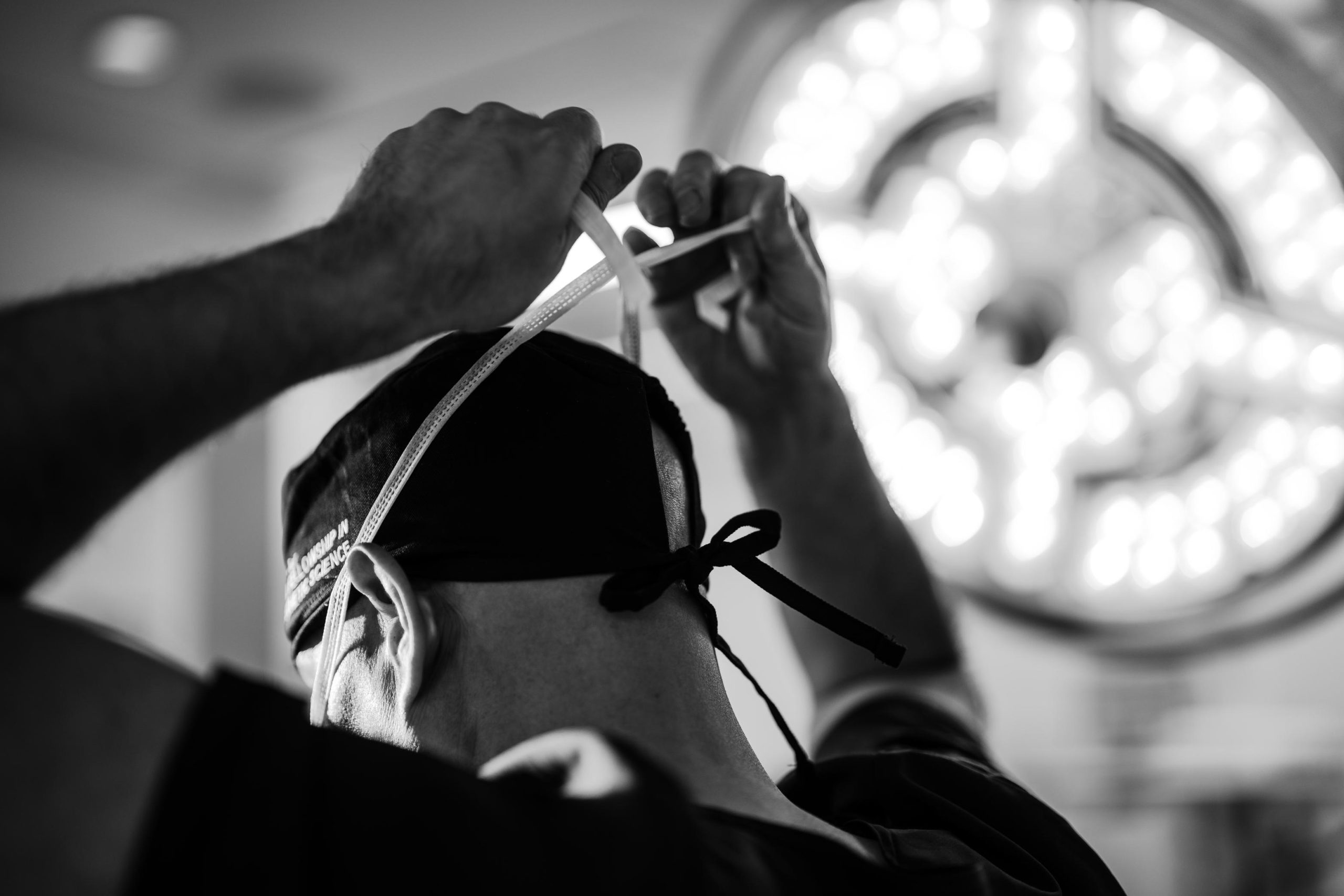
Person tying a surgical mask behind their head beneath an overhead surgical light
Blepharoplasty in melbourne & wagga wagga

Understanding the Periocular Region and How the Eyelid Ages

The eyelid is one of the thinnest and most dynamic regions of the face, in constant motion, reflecting light directly, and central to how expression is conveyed. Even small structural changes become visible early.

With time, several processes occur in parallel. Skin gradually loses elasticity and begins to fold. Orbital fat (the fat cushioning the eye within the socket) may protrude, creating fullness or visible bags, while in adjacent areas volume diminishes, leading to hollowing, particularly along the tear trough. Supporting structures weaken. The resulting change is not simply excess skin, but a shift in contour, support and light reflection.

This is why patients with similar concerns may need entirely different approaches. One may benefit from conservative skin excision; another from repositioning of fat; another from volume restoration. The distinction lies not in whether the concern is upper or lower, but in what has changed and how it should be addressed.
A shift in surgical thinking

How Blepharoplasty Has Evolved

The guiding principle
The shift is away from reduction and toward restoration of balance.

Earlier Approaches

Earlier eyelid surgery focused heavily on removal. Skin was excised, fat was taken out, and the eyelid was tightened.
Fat routinely removed
Skin excised more aggressively
Eyelid tightened
Short-term smoothness
Risk of hollowed, over-corrected or functionality compromised outcomes over time

Modern Approaches

Modern blepharoplasty reflects a different understanding of how the eyelid ages.
Fat retained and repositioned where appropriate
Skin excision conservative and measured
Structural support maintained throughout
Focus on preserving natural contour
Planning for long-term balance
Chosen according to clinical findings

Surgical Approaches to Eyelid Surgery

Eyelid surgery is not a single procedure but a set of approaches chosen according to clinical findings.
01
Upper Eyelid Blepharoplasty
Addresses heaviness from excess skin and, where present, protruding fat. The incision is placed within the natural eyelid crease to help conceal the scar. The challenge lies in judgement: excessive removal risks functional disturbance and an unnatural contour, while insufficient correction limits the benefit.
02
Tarsal Fixation Blepharoplasty
Where eyelid crease definition is limited, tissues may be secured to the tarsal plate (a firm strip of connective tissue that gives the eyelid its shape) to create a more stable and defined crease. This is not performed routinely, only where individual characteristics suggest it is appropriate.
03
Lower Eyelid Blepharoplasty
The lower eyelid requires a more nuanced approach. It exists at the junction between the eye and the cheek, influenced by both local structures and the position of surrounding tissues. For this reason, aggressive removal is avoided.

Transconjunctival approach
Performed through the inner surface of the eyelid, this technique avoids external scarring and is most suitable where fat prominence is present without significant skin excess. Fat may be removed or repositioned to improve contour.

Transcutaneous approach
Where skin laxity is present, an incision just beneath the lash line allows access to both superficial and deeper structures. Contemporary technique in this approach prioritises:
  • conservative skin adjustment
  • redistribution of fat rather than removal
  • preservation of eyelid support
04
Canthopexy
Reinforces the outer corner of the eyelid (where the upper and lower lids meet) to reduce the risk of postoperative laxity or malposition. It is not always apparent in the final result, but is often important to stability over time.
05
Functional Eyelid Surgery
Eyelid surgery is not exclusively aesthetic. Excess upper eyelid skin may interfere with vision, and some patients present with ptosis (drooping caused by weakness in the lifting muscle), eyelid malposition or irritation. In these cases, surgery is directed toward restoring function, often alongside aesthetic refinement.
06
Adjunctive Treatments
In selected cases, fat grafting may restore volume where hollowing is present, laser resurfacing may improve fine lines and texture, and anti-wrinkle injections may soften dynamic lines not addressed surgically. These are considered only where clinically appropriate.
25+
Years of surgical experience, face & neck
4
International surgical fellowships
2
Locations in Melbourne & Wagga Wagga
FRACS SURGEON
FELLOW OF THE ROYAL AUSTRALASIAN COLLEGE OF SURGEONS
Blepharoplasty in melbourne & wagga wagga

Recovery after Blepharoplasty

Recovery varies between patients. The timeframes below are a general guide only.
Weeks 1-2
Swelling and bruising
Swelling, bruising and some discomfort are expected. Temporary tightness or dryness may occur and typically settles as healing progresses.
Weeks 1-2
Return to daily and social activity
Many patients return to daily activities after seven to ten days, and to social activity within ten to fourteen days.
following months
Ongoing healing
Residual swelling may persist for several weeks, and tissues continue to settle over several months.
Results, Risks & Expectations

What Eyelid Surgery Aims to Achieve

The aim of eyelid surgery is to reduce heaviness and restore clarity around the eyes, while keeping the result in proportion with the rest of the face. Results vary between individuals and cannot be guaranteed.

All surgery carries risk. Common effects include swelling, bruising and discomfort. Other risks include infection, bleeding, scarring, dry eyes, asymmetry and difficulty closing the eyes fully. Less common but more significant risks include changes in vision or injury to deeper structures.

Risk can be reduced through careful planning, appropriate patient selection and precise surgical technique, but it cannot be eliminated. Your individual risks are discussed in full at consultation.
Stethoscope with red tubing on a white surface
Consultation & Treatment Planning

Deciding If Surgery Is Right at Consultation

Consultation begins with a detailed assessment of the eyelid region, looking at not only what is visible but the structural relationships beneath the surface that shape it. From this, a plan is formed that is individual, measured and suited to what has actually changed.

Not every patient who presents for blepharoplasty will require surgery, and some may find that the degree of change they are experiencing does not yet warrant it. Where surgery is appropriate, the plan is discussed in full, including the realistic range of outcomes, recovery, and any relevant risks.
What consultation involves
Facial Structure
Assessment of facial anatomy, skeletal support, and soft tissue position.
Ageing Pattern
Identification of which anatomical layers are primarily responsible for the visible changes the patient presents with.
Skin Quality
Assessment of skin elasticity, thickness and condition.
Options
A discussion of appropriate treatment options :surgical, non-surgical, staged, or none at all.
Expectations
An honest account of what is achievable, what recovery involves, and what the realistic limits of treatment are for that individual.

Frequently Asked Questions

Questions most commonly raised about neck ageing and skin laxity.
What is blepharoplasty and what does it treat?
Blepharoplasty is a surgical procedure that reshapes the upper and lower eyelids by removing or repositioning excess skin, fat and occasionally muscle. It addresses concerns such as hooded upper eyelids, under-eye bags, puffiness and skin laxity, all of which can contribute to a tired or aged appearance. In some cases, particularly in the upper eyelid, excess skin may also impair vision, making the procedure functional as well as aesthetic. Beyond tissue removal, the goal is restoration of structure, contour and eyelid integrity.
Who is a suitable candidate for blepharoplasty?
Suitable candidates are those with excess eyelid skin, fat protrusion, or structural changes affecting the upper or lower eyelids, who are in good general health and have realistic expectations. Existing eye conditions that could interfere with healing should be assessed and managed prior to surgery. Clarity of motivation is equally important, particularly in aesthetic procedures. Ultimately, suitability is determined through careful clinical assessment, not patient request alone.
How is blepharoplasty performed?
Blepharoplasty is performed under local anaesthesia with sedation or general anaesthesia, depending on the complexity of the case. Incisions are carefully placed within natural eyelid creases or inside the lower eyelid to minimise visible scarring. Through these access points, excess skin is removed and fat is either excised or repositioned to create a smoother contour. The procedure typically takes between one and three hours, with precision of technique being critical to both aesthetic and functional outcome.
What is the recovery like after eyelid surgery?
Recovery involves an initial phase of swelling, bruising and mild discomfort, which is expected in the first days following surgery. Most patients are able to return to normal daily activities within seven to ten days, although residual swelling may persist for several weeks. Final refinement of results continues over several months, as tissues settle and healing progresses beneath the surface.
Will there be visible scars after blepharoplasty?
Incisions are placed within natural eyelid creases or concealed inside the eyelid, making scars typically subtle and often imperceptible once healed. Over time, scars tend to soften and fade, becoming difficult to detect even at close range. Visibility depends on individual healing, surgical technique and post-operative care, and a meticulous approach to incision placement is essential to achieving a natural outcome.
What are the risks of blepharoplasty?
As with any surgical procedure, blepharoplasty carries risks including infection, bleeding, dry eyes, asymmetry and scarring. Less common but more significant risks include difficulty closing the eyes fully, changes in vision, or injury to deeper structures. These risks are minimised through careful patient selection, precise technique and experienced surgical management, but cannot be entirely eliminated.
How long do the results of blepharoplasty last?
The results of blepharoplasty are generally long-lasting, often enduring for five to ten years or longer, depending on individual ageing. The procedure addresses existing structural changes but does not stop the natural ageing process, and over time subtle changes in skin elasticity and facial structure will continue to occur. Most patients, however, experience sustained improvement in eyelid contour well beyond the early post-operative period.
Does blepharoplasty change the shape of the eyes?
When performed with precision and restraint, blepharoplasty is designed to preserve and refine the natural eye shape rather than alter it. The operative goal is a more rested, defined and structurally supported appearance without creating an operated look. Over-resection or poor technique can distort eyelid position, which is why surgical judgement is critical. A well-executed blepharoplasty produces eyes that appear naturally refreshed rather than surgically altered.
Dr Sim Lew-Gor, Facial Plastic Surgeon in Melbourne & Wagga Wagga

All eyelid surgery begins with consultation

Assessment
·
Planning
·
Suitability
The eyes are read before almost anything else on the face. What blepharoplasty offers, when performed well, is not a change to that reading, but a clearing of what has been obscuring it.

Start with an assessment of your eyelid anatomy and an honest conversation about your options.
Disclaimer: All treatments are subject to individual assessment and may not be suitable for all patients. Results vary between individuals and cannot be guaranteed. A consultation with Dr Sim Lew-Gor is required to determine the most appropriate treatment for your needs.